A Story Americans Keep Telling
On July 4, 2026, the United States marked 250 years since the Declaration of Independence. Looking back across those two and a half centuries, one story appears again and again at the moments when Americans argued about what freedom meant: the story of a people led out of bondage, given a law, and brought within sight of a promised land.
American freedom has many roots. English common law, the Enlightenment, and the republics of Greece and Rome all shaped the founders' thinking. But when Americans wanted to explain why freedom mattered, and what it would cost, they reached most often for the Exodus. John Adams put it plainly: Moses, he wrote, “did more than all their legislators and philosophers.”
This epilogue traces that thread through the chapters of this site, from the Pilgrims' crossing to the present day.
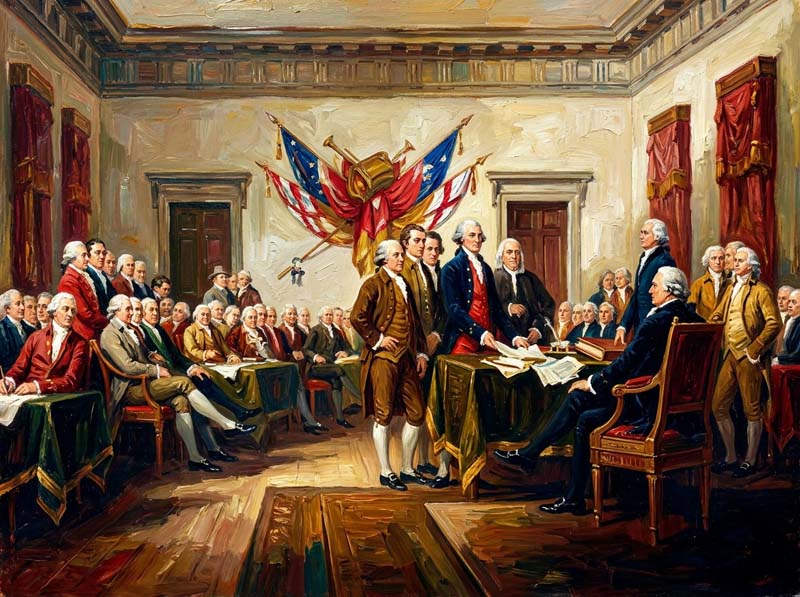
John Trumbull, Declaration of Independence — courtesy of 250 Years of Freedom
The Exodus Thread, 1620–2026
-
1620
A New Exodus
The Pilgrims crossed the Atlantic seeing themselves as a “New Israel,” and John Carver came to be remembered as “the Moses of the Pilgrims.”
Early Settlers → -
1751
Proclaim Liberty
Pennsylvania's State House bell was cast with a verse from the law of Moses: “Proclaim LIBERTY throughout all the Land.” Abolitionists later named it the Liberty Bell.
The Liberty Bell → -
1776
The Great Seal
Days after the Declaration, Franklin proposed Moses parting the Red Sea for the nation's seal, and Jefferson the Israelites led by a pillar of fire.
Declaration & Great Seal → -
1788
The Republic of the Israelites
Harvard's Samuel Langdon urged Americans to see their thirteen states in Israel's twelve tribes, a republic of laws under Moses.
Prototype of Democracy → -
1799
America's Moses
At Washington's death, two thirds of his eulogies compared him to Moses, the leader who brought his people to the edge of the Promised Land.
Founding Fathers → -
1850s
Go Down Moses
Harriet Tubman, “the Moses of her people,” led enslaved Americans north; the spiritual “Go Down Moses” became an anthem of deliverance.
Civil War & Slavery → -
1865
A Second Moses
Lincoln, who ended slavery and saved the Union, was mourned across the country as a second Moses who saw the promised land but did not enter it.
Abraham Lincoln → -
1968
The Mountaintop
The night before his death, Martin Luther King Jr. told a Memphis crowd, “I've seen the promised land. I may not get there with you.”
Civil Rights Movement → -
2007
The Joshua Generation
At Selma, Barack Obama honored the civil rights leaders as “the Moses generation” and called on a new generation to finish the journey.
Modern Presidents →
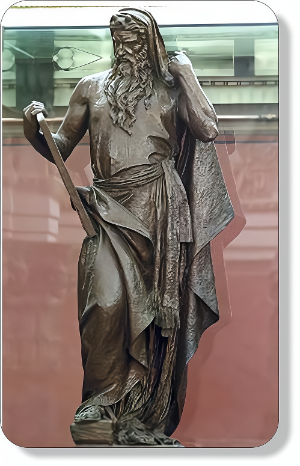
Moses — Library of Congress, Washington D.C.
Why the Story Endures
The Exodus has lasted in American life because it holds together two ideas that freedom always needs. The first is deliverance: no people should be held in bondage. The second is law: a free people must govern themselves, or their freedom will not last. The Pilgrims' compact, the founders' seal, the abolitionists' bell, and King's promised land each drew on one or both.
The story also carries a warning that every generation has rediscovered. Moses saw the promised land but did not enter it, and each generation that invoked him understood its work as unfinished. Two hundred and fifty years on, that may be the most American part of the story.
Proclaim LIBERTY throughout all the Land unto all the Inhabitants thereof.
Leviticus 25:10 — Inscription on the Liberty Bell250 Years of American Freedom
For the wider history of the Revolution, the founding documents, and the Americans who carried freedom forward, visit our companion site, 250 Years of Freedom.
The Declaration of Independence
Read the full text, meet the signers, and explore the ideas behind July 4, 1776.
Visit 250 Years of Freedom ↗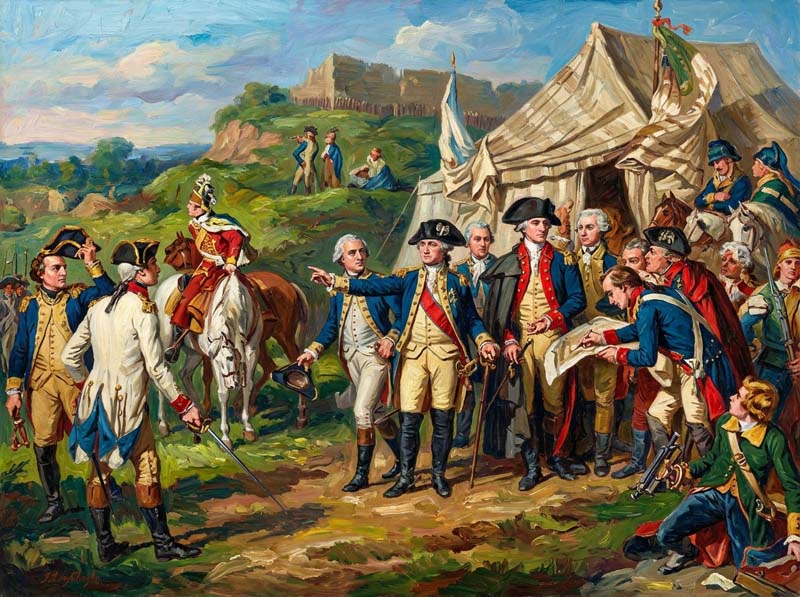
The American Revolution
From Lexington and Concord to Yorktown, the eight-year war that made independence real.
Visit 250 Years of Freedom ↗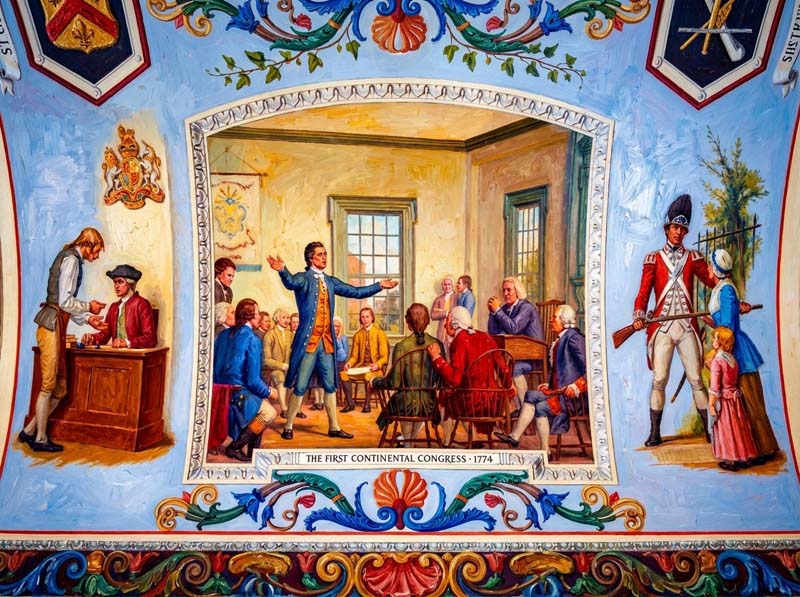
Great Americans
Profiles of fifty Americans, including Washington, Lincoln, Harriet Tubman, and Martin Luther King Jr.
Visit 250 Years of Freedom ↗